
REFERENCES TO MISOPHONIA IN THE LITERATURE
Relevant articles on selective sound sensitivity syndrome, phonophobia, hyperacusis, sound hypersensitivity, noise annoyance and noise sensitivity may be listed, even where the term misophonia is not explicitly used. hc = hardcover, pb = paperback.
NB Inclusion in this list does NOT necessarily imply that Misophonia UK endorses the publication's contents. It is simply a list of articles published with the relevant keyword.
Last webpage review: 7 October 2012
Relevant articles on selective sound sensitivity syndrome, phonophobia, hyperacusis, sound hypersensitivity, noise annoyance and noise sensitivity may be listed, even where the term misophonia is not explicitly used. hc = hardcover, pb = paperback.
NB Inclusion in this list does NOT necessarily imply that Misophonia UK endorses the publication's contents. It is simply a list of articles published with the relevant keyword.
Last webpage review: 7 October 2012
Journal and scholarly website articles (by chronology)
Click on the title for a link to the article's abstract or (in some cases), the full article. Weblog entries are included where content is of an appropriate standard.
SA Stansfeld, Academic Department of Psychiatry, University College and Middlesex School of Medicine, London, Noise, noise sensitivity and psychiatric disorder: epidemiological and psychophysiological studies, Psycholological Medicine Monograph Supplement 1992, Vol 22, pages 1-44.
---------------------------------------------------------------------------------------------------------------------------------------------------------------------------------
M Anari, A Axelsson, A Eliasson and L Magnusson, Hypersensitivity to sound - questionnaire data, audiometry and classification, Scandinavian Audiology, 1999, Vol 28, Issue 4, pp 219-30.
---------------------------------------------------------------------------------------------------------------------------------------------------------------------------------
Pawel J Jastreboff and Margaret M Jastreboff, Tinnitus Retraining Therapy (TRT) as a Method for Treatment of Tinnitus and Hyperacusis Patients, Journal of the American Academy of Audiology, March 2000, Vol 11, Issue 3.
---------------------------------------------------------------------------------------------------------------------------------------------------------------------------------
Margaret M Jastreboff and Pawel J Jastreboff, Hyperacusis, Audiology Online, 18 June 2001.
---------------------------------------------------------------------------------------------------------------------------------------------------------------------------------
Margaret M Jastreboff and Pawel J Jastreboff, Components of decreased sound tolerance: hyperacusis, misophonia, phonophobia, ITHS Newsletter, 2 July 2001.
---------------------------------------------------------------------------------------------------------------------------------------------------------------------------------
Pawel J Jastreboff, Hyperacusis in Children, Audiology Online, 20 May 2002.
---------------------------------------------------------------------------------------------------------------------------------------------------------------------------------
Gerhard Andersson, Nina Lindvall, Timo Hursti, Per Carlbring and Gerhard Andersson, Hypersensitivity to sound (hyperacusis): a prevalence study conducted via the internet and post, International Journal of Audiology, 2002, Vol 41, Issue 8, pp 545-554.
---------------------------------------------------------------------------------------------------------------------------------------------------------------------------------
Margaret M Jastreboff and Pawel J Jastrebof, Decreased sound tolerance and Tinnitus Retraining Therapy (TRT), Australian and New Zealand Journal of Audiology, November 2002, Vol 24, Issue 2, pp 74-84. Free access is available to this article and it contains the most detailed explication of misophonia by the Jastreboffs that I have seen.
Click on the title for a link to the article's abstract or (in some cases), the full article. Weblog entries are included where content is of an appropriate standard.
SA Stansfeld, Academic Department of Psychiatry, University College and Middlesex School of Medicine, London, Noise, noise sensitivity and psychiatric disorder: epidemiological and psychophysiological studies, Psycholological Medicine Monograph Supplement 1992, Vol 22, pages 1-44.
---------------------------------------------------------------------------------------------------------------------------------------------------------------------------------
M Anari, A Axelsson, A Eliasson and L Magnusson, Hypersensitivity to sound - questionnaire data, audiometry and classification, Scandinavian Audiology, 1999, Vol 28, Issue 4, pp 219-30.
---------------------------------------------------------------------------------------------------------------------------------------------------------------------------------
Pawel J Jastreboff and Margaret M Jastreboff, Tinnitus Retraining Therapy (TRT) as a Method for Treatment of Tinnitus and Hyperacusis Patients, Journal of the American Academy of Audiology, March 2000, Vol 11, Issue 3.
---------------------------------------------------------------------------------------------------------------------------------------------------------------------------------
Margaret M Jastreboff and Pawel J Jastreboff, Hyperacusis, Audiology Online, 18 June 2001.
---------------------------------------------------------------------------------------------------------------------------------------------------------------------------------
Margaret M Jastreboff and Pawel J Jastreboff, Components of decreased sound tolerance: hyperacusis, misophonia, phonophobia, ITHS Newsletter, 2 July 2001.
---------------------------------------------------------------------------------------------------------------------------------------------------------------------------------
Pawel J Jastreboff, Hyperacusis in Children, Audiology Online, 20 May 2002.
---------------------------------------------------------------------------------------------------------------------------------------------------------------------------------
Gerhard Andersson, Nina Lindvall, Timo Hursti, Per Carlbring and Gerhard Andersson, Hypersensitivity to sound (hyperacusis): a prevalence study conducted via the internet and post, International Journal of Audiology, 2002, Vol 41, Issue 8, pp 545-554.
---------------------------------------------------------------------------------------------------------------------------------------------------------------------------------
Margaret M Jastreboff and Pawel J Jastrebof, Decreased sound tolerance and Tinnitus Retraining Therapy (TRT), Australian and New Zealand Journal of Audiology, November 2002, Vol 24, Issue 2, pp 74-84. Free access is available to this article and it contains the most detailed explication of misophonia by the Jastreboffs that I have seen.
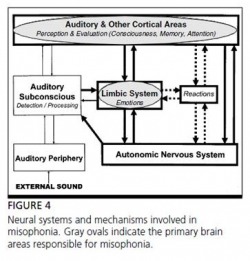
Australian and New Zealand Jnl of Audiology 2002
James A Henry, Margaret M Jastreboff, Pawel J Jastreboff, Martin A Schechter and Stephen A Fausti, Assessment of Patients for Treatment with Tinnitus Retraining Therapy, Journal of the American Academy of Audiology, November/December 2002, Vol 13 Issue 10, p 523.
---------------------------------------------------------------------------------------------------------------------------------------------------------------------------------
James A Henry, Margaret M Jastreboff, Pawel J Jastreboff, Martin A Schechter and Stephen A Fausti, Guide to conducting tinnitus retraining therapy initial and follow-up interviews, Journal of Rehabilitation Research and Development, March/April 2003, Vol 40, Issue 2, pp 157-178.
---------------------------------------------------------------------------------------------------------------------------------------------------------------------------------
David M Baguley, Hyperacusis, Journal of the Royal Society of Medicine, 2003, Vol 96, pp 582-585.
---------------------------------------------------------------------------------------------------------------------------------------------------------------------------------
H Schaaf, B Klofat and G Hesse, Hyperakusis, Phonophobie und Recruitment. Mit Geräuschempfindlichkeit assoziierte Hörabweichungen [Hyperacusis, phonophobia, and recruitment. Abnormal deviations of hearing associated with hypersensitivity to sound], HNO, December 2003, Vol 51, Issue 12, pp 1005–1011 [in German with English abstract].
---------------------------------------------------------------------------------------------------------------------------------------------------------------------------------
Norma R Mraz MA and Robert L Folmer PhD, Overprotection-Hyperacusis-Phonophobia & Tinnitus Retraining Therapy: A Case Study, Audiology Online, 22 December 2003.
---------------------------------------------------------------------------------------------------------------------------------------------------------------------------------
Robert L Koegel, Daniel Openden and Lynn Kern Koegel, University of California, Santa Barbara, A Systematic Desensitization Paradigm to Treat Hypersensitivity to Auditory Stimuli in Children with Autism in Family Contexts, Research and Practice for Persons with Severe Disabilities, Summer 2004, Vol 29, Issue 2, pp 122-134.
---------------------------------------------------------------------------------------------------------------------------------------------------------------------------------
Erissandra Gomes, Newra T Rotta , Fleming S Pedroso, Pricila Sleifer and Marlene C Danesi, Universidade Federal do Rio Grande do Sul, Brazil, Auditory Hypersensitivity in Children and Teenagers with Autistic Spectrum Disorder, Arquivos de Neuro-Psiquiatria, 2004, Vol 62(3-B), pp 797-801. Full text.
---------------------------------------------------------------------------------------------------------------------------------------------------------------------------------
James A Henry, Tara Zaugg and Martin A Schechter, Clinical Guide for Audiologic Tinnitus Management I: Assessment, American Journal of Audiology, June 2005, Vol 14, Issue 1, pp 21-48.
---------------------------------------------------------------------------------------------------------------------------------------------------------------------------------
James A Henry, Tara Zaugg and Martin A Schechter, Clinical Guide for Audiologic Tinnitus Management II: Treatment, American Journal of Audiology, June 2005, Vol 14, Issue 1, pp 49-70.
---------------------------------------------------------------------------------------------------------------------------------------------------------------------------------
James A Henry, Kyle C Dennis and Martin A Schechter, General Review of Tinnitus: Prevalence, Mechanisms, Effects and Management, Journal of Speech, Language and Hearing Research, October 2005, Vol 48, pp 1204–1235.
---------------------------------------------------------------------------------------------------------------------------------------------------------------------------------
Keila Alessandra Baraldi Knobel and Tanit Ganz Sanchez, Loudness discomfort level in normal hearing individuals [originally Nível de desconforto para sensação de intensidade em indivíduos com audição normal], Pró-Fono Revista de Atualização Científica, January-April 2006, Vol 18, Issue 1, pp 31-40.
---------------------------------------------------------------------------------------------------------------------------------------------------------------------------------
PJ Jastreboff and MM Jastreboff, Tinnitus Retraining Therapy: a Different View on Tinnitus, ORL, 3 March 2006, Vol 68, Issue 1, pp 23-30.
---------------------------------------------------------------------------------------------------------------------------------------------------------------------------------
David Veale, A Compelling Desire for Deafness, Journal of Deaf Studies and Deaf Education, 2006, Vol 11, Issue 3, pp 369-372.
---------------------------------------------------------------------------------------------------------------------------------------------------------------------------------
Sztuka A, Pośpiech L, Gawron W and Dudek K, DPOAE in tinnitus patients with cochlear hearing loss considering hyperacusis and misophonia, Otolaryngologia polska 2006, Issue 60, Vol 5, pp 765–72 [English abstract].
---------------------------------------------------------------------------------------------------------------------------------------------------------------------------------
Coelho CB, Sanchez TG and Tyler RS, Hyperacusis, sound annoyance and loudness hypersensitivity in children, Progress in Brain Research, 2007, Vol 166, pp 169-78.
---------------------------------------------------------------------------------------------------------------------------------------------------------------------------------
C Plewnia, M Reimold, A Najib, B Brehm, G Reischl, SK Plontke and C Gerloff, Department of Psychiatry, Neurophysiology Section, University of Tubingen, Germany, Dose-dependent attenuation of auditory phantom perception (tinnitus) by PET-guided repetitive transcranial magnetic stimulation, Human Brain Mapping, March 2007, Vol 28(3), pp 238-46.
---------------------------------------------------------------------------------------------------------------------------------------------------------------------------------
Stephan Sandrock, Martin Schutte and Barbara Griefahn, Institut für Arbeitsphysiologie an der Universität Dortmund, Germany,The reliability of the noise sensitivity questionnaire in a cross-national analysis, Noise & Health, 2007, Vol 9, Issue 34, pp 8-14
---------------------------------------------------------------------------------------------------------------------------------------------------------------------------------
Martin Schutte, Anke Marks, Edna Wenning and Barbara Griefahn, Institut für Arbeitsphysiologie an der Universität Dortmund, Germany, The development of the noise sensitivity questionnaire, Noise & Health, 2007, Vol 9, Issue 34, pp 15-24.
---------------------------------------------------------------------------------------------------------------------------------------------------------------------------------
Marc A Fagelson, The Association Between Tinnitus and Posttraumatic Stress Disorder, American Journal of Audiology, December 2007, Vol 16 Issue 2, pp 107-117.
---------------------------------------------------------------------------------------------------------------------------------------------------------------------------------
G Kok, Hyperacusis: Een onderzoek naar het psychisch, fysiek en sociaal functioneren en de globale kwaliteit van leven van mensen die te veel horen, Wetenschapswinkel Geneeskunde en Volksgezondheid UMCG, December 2007.
---------------------------------------------------------------------------------------------------------------------------------------------------------------------------------
George Hadjipavlou, MD MA, Susan Baer, MD PhD, Amanda Lau and Andrew Howard, MD, Selective Sound Intolerance and emotional distress: what every clinician should hear, Letters to the editor, Psychosomatic Medicine, July 2008, Volume 70, Pages 739-740.
---------------------------------------------------------------------------------------------------------------------------------------------------------------------------------
Eveline Maris, The Social Side of Noise Annoyance, PhD thesis, University of Leiden, 17 December 2008.
---------------------------------------------------------------------------------------------------------------------------------------------------------------------------------
Marsha Johnson, Selective Sound Sensitivity Syndrome: an audiologist has collected and analysed the first data on an emerging condition, Advance for Audiologists magazine, 15 September 2009.
---------------------------------------------------------------------------------------------------------------------------------------------------------------------------------
D Attri and A N Nagarkar, Resolution of hyperacusis associated with depression, following lithium administration and directive counselling, The Journal of Laryngology & Otology, December 2009, first view article.
---------------------------------------------------------------------------------------------------------------------------------------------------------------------------------
Aleksandra Sztuka, Lucyna Pośpiech and Wojciech Gawron, DPOAE in estimation of the function of the cochlea in tinnitus patients with normal hearing, Auris Nasus Larynx, February 2010, Vol 37, Issue 1, pp 55-60.
---------------------------------------------------------------------------------------------------------------------------------------------------------------------------------
Zamzil Amin Asha Ari (Department of Otorhinolaryngology-Head and Neck Surgery, Faculty of Medicine, International Islamic University Malaysia, Jalan Hospital, Kuantan, Malaysia), Nora Mat Zain (Department of Psychiatry, International Islamic University Malaysia) and Ailin Razali (Department of Otorhinolaryngology-Head and Neck Surgery, International Islamic University Malaysia), Phonophobia and Hyperacusis: Practical Points from a Case Report, Malaysian Journal of Medical Sciences, Volume 17, No 1, 2010, pages 49-51. Full text.
---------------------------------------------------------------------------------------------------------------------------------------------------------------------------------
Craig Formby (PhD Study Chair) and Roberta W Scherer (PhD Data Coordinating Center Director), Tinnitus Retraining Therapy Trial, Manual of Procedures, 11 February 2010.
---------------------------------------------------------------------------------------------------------------------------------------------------------------------------------
Lillian N Stiegler (Southeastern Louisiana University) and Rebecca Davis (Southeastern Louisiana University) Understanding Sound Sensitivity in Individuals with Autism Spectrum Disorders, Focus on Autism and Other Developmental Disabilities, June 2010, vol 25,no 2, pages 67-75.Full text.
---------------------------------------------------------------------------------------------------------------------------------------------------------------------------------
James A Henry, Margaret M Jastreboff, Pawel J Jastreboff, Martin A Schechter and Stephen A Fausti, Guide to conducting tinnitus retraining therapy initial and follow-up interviews, Journal of Rehabilitation Research and Development, March/April 2003, Vol 40, Issue 2, pp 157-178.
---------------------------------------------------------------------------------------------------------------------------------------------------------------------------------
David M Baguley, Hyperacusis, Journal of the Royal Society of Medicine, 2003, Vol 96, pp 582-585.
---------------------------------------------------------------------------------------------------------------------------------------------------------------------------------
H Schaaf, B Klofat and G Hesse, Hyperakusis, Phonophobie und Recruitment. Mit Geräuschempfindlichkeit assoziierte Hörabweichungen [Hyperacusis, phonophobia, and recruitment. Abnormal deviations of hearing associated with hypersensitivity to sound], HNO, December 2003, Vol 51, Issue 12, pp 1005–1011 [in German with English abstract].
---------------------------------------------------------------------------------------------------------------------------------------------------------------------------------
Norma R Mraz MA and Robert L Folmer PhD, Overprotection-Hyperacusis-Phonophobia & Tinnitus Retraining Therapy: A Case Study, Audiology Online, 22 December 2003.
---------------------------------------------------------------------------------------------------------------------------------------------------------------------------------
Robert L Koegel, Daniel Openden and Lynn Kern Koegel, University of California, Santa Barbara, A Systematic Desensitization Paradigm to Treat Hypersensitivity to Auditory Stimuli in Children with Autism in Family Contexts, Research and Practice for Persons with Severe Disabilities, Summer 2004, Vol 29, Issue 2, pp 122-134.
---------------------------------------------------------------------------------------------------------------------------------------------------------------------------------
Erissandra Gomes, Newra T Rotta , Fleming S Pedroso, Pricila Sleifer and Marlene C Danesi, Universidade Federal do Rio Grande do Sul, Brazil, Auditory Hypersensitivity in Children and Teenagers with Autistic Spectrum Disorder, Arquivos de Neuro-Psiquiatria, 2004, Vol 62(3-B), pp 797-801. Full text.
---------------------------------------------------------------------------------------------------------------------------------------------------------------------------------
James A Henry, Tara Zaugg and Martin A Schechter, Clinical Guide for Audiologic Tinnitus Management I: Assessment, American Journal of Audiology, June 2005, Vol 14, Issue 1, pp 21-48.
---------------------------------------------------------------------------------------------------------------------------------------------------------------------------------
James A Henry, Tara Zaugg and Martin A Schechter, Clinical Guide for Audiologic Tinnitus Management II: Treatment, American Journal of Audiology, June 2005, Vol 14, Issue 1, pp 49-70.
---------------------------------------------------------------------------------------------------------------------------------------------------------------------------------
James A Henry, Kyle C Dennis and Martin A Schechter, General Review of Tinnitus: Prevalence, Mechanisms, Effects and Management, Journal of Speech, Language and Hearing Research, October 2005, Vol 48, pp 1204–1235.
---------------------------------------------------------------------------------------------------------------------------------------------------------------------------------
Keila Alessandra Baraldi Knobel and Tanit Ganz Sanchez, Loudness discomfort level in normal hearing individuals [originally Nível de desconforto para sensação de intensidade em indivíduos com audição normal], Pró-Fono Revista de Atualização Científica, January-April 2006, Vol 18, Issue 1, pp 31-40.
---------------------------------------------------------------------------------------------------------------------------------------------------------------------------------
PJ Jastreboff and MM Jastreboff, Tinnitus Retraining Therapy: a Different View on Tinnitus, ORL, 3 March 2006, Vol 68, Issue 1, pp 23-30.
---------------------------------------------------------------------------------------------------------------------------------------------------------------------------------
David Veale, A Compelling Desire for Deafness, Journal of Deaf Studies and Deaf Education, 2006, Vol 11, Issue 3, pp 369-372.
---------------------------------------------------------------------------------------------------------------------------------------------------------------------------------
Sztuka A, Pośpiech L, Gawron W and Dudek K, DPOAE in tinnitus patients with cochlear hearing loss considering hyperacusis and misophonia, Otolaryngologia polska 2006, Issue 60, Vol 5, pp 765–72 [English abstract].
---------------------------------------------------------------------------------------------------------------------------------------------------------------------------------
Coelho CB, Sanchez TG and Tyler RS, Hyperacusis, sound annoyance and loudness hypersensitivity in children, Progress in Brain Research, 2007, Vol 166, pp 169-78.
---------------------------------------------------------------------------------------------------------------------------------------------------------------------------------
C Plewnia, M Reimold, A Najib, B Brehm, G Reischl, SK Plontke and C Gerloff, Department of Psychiatry, Neurophysiology Section, University of Tubingen, Germany, Dose-dependent attenuation of auditory phantom perception (tinnitus) by PET-guided repetitive transcranial magnetic stimulation, Human Brain Mapping, March 2007, Vol 28(3), pp 238-46.
---------------------------------------------------------------------------------------------------------------------------------------------------------------------------------
Stephan Sandrock, Martin Schutte and Barbara Griefahn, Institut für Arbeitsphysiologie an der Universität Dortmund, Germany,The reliability of the noise sensitivity questionnaire in a cross-national analysis, Noise & Health, 2007, Vol 9, Issue 34, pp 8-14
---------------------------------------------------------------------------------------------------------------------------------------------------------------------------------
Martin Schutte, Anke Marks, Edna Wenning and Barbara Griefahn, Institut für Arbeitsphysiologie an der Universität Dortmund, Germany, The development of the noise sensitivity questionnaire, Noise & Health, 2007, Vol 9, Issue 34, pp 15-24.
---------------------------------------------------------------------------------------------------------------------------------------------------------------------------------
Marc A Fagelson, The Association Between Tinnitus and Posttraumatic Stress Disorder, American Journal of Audiology, December 2007, Vol 16 Issue 2, pp 107-117.
---------------------------------------------------------------------------------------------------------------------------------------------------------------------------------
G Kok, Hyperacusis: Een onderzoek naar het psychisch, fysiek en sociaal functioneren en de globale kwaliteit van leven van mensen die te veel horen, Wetenschapswinkel Geneeskunde en Volksgezondheid UMCG, December 2007.
---------------------------------------------------------------------------------------------------------------------------------------------------------------------------------
George Hadjipavlou, MD MA, Susan Baer, MD PhD, Amanda Lau and Andrew Howard, MD, Selective Sound Intolerance and emotional distress: what every clinician should hear, Letters to the editor, Psychosomatic Medicine, July 2008, Volume 70, Pages 739-740.
---------------------------------------------------------------------------------------------------------------------------------------------------------------------------------
Eveline Maris, The Social Side of Noise Annoyance, PhD thesis, University of Leiden, 17 December 2008.
---------------------------------------------------------------------------------------------------------------------------------------------------------------------------------
Marsha Johnson, Selective Sound Sensitivity Syndrome: an audiologist has collected and analysed the first data on an emerging condition, Advance for Audiologists magazine, 15 September 2009.
---------------------------------------------------------------------------------------------------------------------------------------------------------------------------------
D Attri and A N Nagarkar, Resolution of hyperacusis associated with depression, following lithium administration and directive counselling, The Journal of Laryngology & Otology, December 2009, first view article.
---------------------------------------------------------------------------------------------------------------------------------------------------------------------------------
Aleksandra Sztuka, Lucyna Pośpiech and Wojciech Gawron, DPOAE in estimation of the function of the cochlea in tinnitus patients with normal hearing, Auris Nasus Larynx, February 2010, Vol 37, Issue 1, pp 55-60.
---------------------------------------------------------------------------------------------------------------------------------------------------------------------------------
Zamzil Amin Asha Ari (Department of Otorhinolaryngology-Head and Neck Surgery, Faculty of Medicine, International Islamic University Malaysia, Jalan Hospital, Kuantan, Malaysia), Nora Mat Zain (Department of Psychiatry, International Islamic University Malaysia) and Ailin Razali (Department of Otorhinolaryngology-Head and Neck Surgery, International Islamic University Malaysia), Phonophobia and Hyperacusis: Practical Points from a Case Report, Malaysian Journal of Medical Sciences, Volume 17, No 1, 2010, pages 49-51. Full text.
---------------------------------------------------------------------------------------------------------------------------------------------------------------------------------
Craig Formby (PhD Study Chair) and Roberta W Scherer (PhD Data Coordinating Center Director), Tinnitus Retraining Therapy Trial, Manual of Procedures, 11 February 2010.
---------------------------------------------------------------------------------------------------------------------------------------------------------------------------------
Lillian N Stiegler (Southeastern Louisiana University) and Rebecca Davis (Southeastern Louisiana University) Understanding Sound Sensitivity in Individuals with Autism Spectrum Disorders, Focus on Autism and Other Developmental Disabilities, June 2010, vol 25,no 2, pages 67-75.Full text.
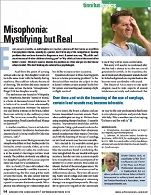
Advance for Audiologists Sept-Oct 2010
Dhyan Cassie, Misophonia: Mystifying but Real, Advance for Audiologists magazine, September-October 2010, Vol 12, no 5, page 14.
---------------------------------------------------------------------------------------------------------------------------------------------------------------------------------
Otorrinos2do's Blog provides a short commentary on misophonia and phonophobia, published on 21 November 2010 at http://otorrinos2do.wordpress.com.
Points out that the term misophonia was coined to convey many of the same sentiments as phonophobia, but without the automatic connotation of phobia. This is useful as, in some jurisdictions, it is unlawful to treat a phobia unless licensed as a psychologist or psychiatrist.
Also comments that misophonia has yet to enter widespread usage and is not yet a recognized term in healthcare databases such as Medline.
The phonophobia entry highlights the fact that the term is widely used in neurology in association with migraine. One study showed that as many as half of all migraine attacks are accompanied by increased sound sensitivity. Observes that, in audiology at least, phonophobia implies a reaction that has specific emotional associations.
---------------------------------------------------------------------------------------------------------------------------------------------------------------------------------
Hashir Aazh, Brian CJ Moore and Deepak Prasher, Providing support to school children with hyperacusis, British Journal of School Nursing, 13 May 2011, Volume 6, Issue 4, pages 174 – 178.
Hyperacusis is a condition associated with irritation and discomfort from environmental sounds. A person with hyperacusis is bothered by sounds that are generally acceptable to others. Hyperacusis has been reported with people various pathologies as well as for people with no hearing loss or health condition. It is a common condition in children, especially children with Williams Syndrome, autistic spectrum disorder and tinnitus. The exact mechanisms underlying hyperacusis are unknown. However, it has been hypothesised that it may be a consequence of abnormally high gain applied by the central auditory system. Adverse emotional and behavioural reactions to the various sounds in the classroom may be experienced by school age children with hyperacusis. Audiological assessment and management of hyperacusis are briefly discussed in this article.
---------------------------------------------------------------------------------------------------------------------------------------------------------------------------------
Susan Holmes PhD SRN FRSH CMS (Faculty of Health and Social Care, Canterbury Christ Church University, Canterbury, UK) and Nigel D Padgham MB ChB FRCSEd FRCS (Kent and Canterbury Hospital, Canterbury, UK), ''Ringing in the Ears'': Narrative Review of Tinnitus and Its Impact, Biological Research for Nursing (2011) 13(1) 97-108
Excerpt: Approximately 40% of those with tinnitus also develop hyperacusis, or intolerance to environmental sounds (Baguley, 2003), which may lead to misophonia—an intolerance to specific sounds (Møller, 2006) or an emotional response to sounds (Henry, Dennis, & Schechter, 2005), thus exacerbating the difficulties they face (Jastreboff & Jastreboff, 2006).
---------------------------------------------------------------------------------------------------------------------------------------------------------------------------------
Paula Schwartz AuD, Jason Leyendecker AuD and Megan Conlon, Tinnitus and Hyperacusis Clinic, Twin Cities, USA, Hyperacusis and misophonia: the lesser-known siblings of tinnitus, Minnesota Medicine, November 2011; 94(11), pages 42-3
Hyperacusis (decreased sound tolerance) and misophonia (fear of sound) are two conditions about which little is known. Consequently, physicians often struggle when they encounter patients who are affected by them. This article attempts to educate the medical community about hyperacusis and misophonia, both of which can have devastating effects on the lives of patients, and ways to manage them.
---------------------------------------------------------------------------------------------------------------------------------------------------------------------------------
Paula Emanuela Fernandes Cândido, Eugenio Andrés Díaz Merino and Leila Amaral Gontijo, Federal University of Santa Catarina, Technological Center, Department of Production Engineering and Systems, Florianópolis, SC, Brazil, An auditive protection for professional musicians, Work: A Journal of Prevention, Assessment and Rehabilitation 41 (2012) 3260-3268.
Excerpt: "The misophonia (emotional answer or conditioned associated to the aversion or to the unpleasure to the exhibition to some types of sounds) and feeling of fullness in the ear was related by 30%, being that of these, 10% related to have few times in the two cases, 20% suffers with misophonia some times and 20% suffers with feeling of fullness in the ear. Regarding the humming, 20% relate to feel seldom, 20% frequently and 60% do not present this picture." [sic]
---------------------------------------------------------------------------------------------------------------------------------------------------------------------------------
Ying-Hua Tan, Chun-Yan Xi, Shu-Ping Jiang, Bing-Xin Shi, Li-Bo Wang and Lin Wang, Developmental Pediatrics, Shengjing Hospital, China Medical University, Shenyang, China, Auditory abnormalities in children with autism, Open Journal of Psychiatry, 2012, Volume 2, pages 33-37.
Phonophobia: Children with autism felt more discomfort when exposed to certain sounds.
---------------------------------------------------------------------------------------------------------------------------------------------------------------------------------
M Neal and A E Cavanna, intercalating medical student, University of Birmingham, Poster abstracts for the British Neuropsychiatry Association 2012 AGM P3 Selective sound sensitivity syndrome (misophonia) and Tourette syndrome, Journal of Neurology, Neurosurgery, and Psychiatry 2012 Volume 83, e1.
The phenomenological similarity between misophonia and other subjective symptoms commonly reported by patients with TS (especially premonitory urges, obsessive-compulsive symptoms, not-just-right experiences) suggests a possible pathophysiological association.
---------------------------------------------------------------------------------------------------------------------------------------------------------------------------------
Deepali Kohli, Zbigniew W Ras, Pamela L Thompson, Pawel J Jastreboff and Alicja Wieczorkowska, University of North Carolina, Charlotte, From Music to Emotions and Tinnitus Treatment, Initial Study, August 2012
Abstract. The extended tinnitus database consisting of 758 patients with information repeated from the original database of 555 patients, along with the addition of visits and a new questionnaire, the Tinnitus Function Index and Emotion Indexing Questionnaire, is used to mine for knowledge. New patients in the extended database represent those patients that have completed the Tinnitus Function Index questionnaire (TFI) [10]. The patient visits are separated and used for mining and action rule discovery based on all features and treatment success indicators including several new features tied to emotions (based on a mapping from TFI to Emotion Indexing Questionnaire (EIQ) [14]; EIQ questionnaire is used by our team to build personalized classifiers for automatic indexing of music by emotions). We propose a link between TFI and EIQ leading to a creation of new features in the extended tinnitus database. Then, we extract knowledge from this new database in the form of association action rules to assist with understanding and validation of diagnosis and treatment outcomes.
---------------------------------------------------------------------------------------------------------------------------------------------------------------------------------
Kathleen Joos, Sven Vanneste and Dirk De Ridder, Brai2n, Tinnitus Research Initiative Clinic Antwerp, Department of Neurosurgery, University Hospital Antwerp, Belgium, Disentangling Depression and Distress Networks in the Tinnitus Brain, PloS one, 2012
---------------------------------------------------------------------------------------------------------------------------------------------------------------------------------
Martin Benka Wallén, Department of Physiology and Pharmacology, Karolinska Institutet, Stockholm, Dan Hasson, Department of Physiology and Pharmacology, Karolinska Institutet, Stockholm and Stress Research Institute, Stockholm University, Stockholm, Töres Theorell, Stress Research Institute, Stockholm University, Stockholm and Department of Public Health, Karolinska Institutet, Stockholm, and Barbara Canlon, Department of Physiology and Pharmacology, Karolinska Institutet, Stockholm, The correlation between the hyperacusis questionnaire and uncomfortable loudness levels is dependent on emotional exhaustion, International Journal of Audiology, October 2012, Volume 51, No. 10, pages 722-729.
Hyperacusis is a specific type of auditory hypersensitivity that should be kept distinct from other similar phenomena, such as phonophobia, misophobia [sic], or recruitment of loudness (Jastreboff & Jastreboff, 2003).
---------------------------------------------------------------------------------------------------------------------------------------------------------------------------------
Otorrinos2do's Blog provides a short commentary on misophonia and phonophobia, published on 21 November 2010 at http://otorrinos2do.wordpress.com.
Points out that the term misophonia was coined to convey many of the same sentiments as phonophobia, but without the automatic connotation of phobia. This is useful as, in some jurisdictions, it is unlawful to treat a phobia unless licensed as a psychologist or psychiatrist.
Also comments that misophonia has yet to enter widespread usage and is not yet a recognized term in healthcare databases such as Medline.
The phonophobia entry highlights the fact that the term is widely used in neurology in association with migraine. One study showed that as many as half of all migraine attacks are accompanied by increased sound sensitivity. Observes that, in audiology at least, phonophobia implies a reaction that has specific emotional associations.
---------------------------------------------------------------------------------------------------------------------------------------------------------------------------------
Hashir Aazh, Brian CJ Moore and Deepak Prasher, Providing support to school children with hyperacusis, British Journal of School Nursing, 13 May 2011, Volume 6, Issue 4, pages 174 – 178.
Hyperacusis is a condition associated with irritation and discomfort from environmental sounds. A person with hyperacusis is bothered by sounds that are generally acceptable to others. Hyperacusis has been reported with people various pathologies as well as for people with no hearing loss or health condition. It is a common condition in children, especially children with Williams Syndrome, autistic spectrum disorder and tinnitus. The exact mechanisms underlying hyperacusis are unknown. However, it has been hypothesised that it may be a consequence of abnormally high gain applied by the central auditory system. Adverse emotional and behavioural reactions to the various sounds in the classroom may be experienced by school age children with hyperacusis. Audiological assessment and management of hyperacusis are briefly discussed in this article.
---------------------------------------------------------------------------------------------------------------------------------------------------------------------------------
Susan Holmes PhD SRN FRSH CMS (Faculty of Health and Social Care, Canterbury Christ Church University, Canterbury, UK) and Nigel D Padgham MB ChB FRCSEd FRCS (Kent and Canterbury Hospital, Canterbury, UK), ''Ringing in the Ears'': Narrative Review of Tinnitus and Its Impact, Biological Research for Nursing (2011) 13(1) 97-108
Excerpt: Approximately 40% of those with tinnitus also develop hyperacusis, or intolerance to environmental sounds (Baguley, 2003), which may lead to misophonia—an intolerance to specific sounds (Møller, 2006) or an emotional response to sounds (Henry, Dennis, & Schechter, 2005), thus exacerbating the difficulties they face (Jastreboff & Jastreboff, 2006).
---------------------------------------------------------------------------------------------------------------------------------------------------------------------------------
Paula Schwartz AuD, Jason Leyendecker AuD and Megan Conlon, Tinnitus and Hyperacusis Clinic, Twin Cities, USA, Hyperacusis and misophonia: the lesser-known siblings of tinnitus, Minnesota Medicine, November 2011; 94(11), pages 42-3
Hyperacusis (decreased sound tolerance) and misophonia (fear of sound) are two conditions about which little is known. Consequently, physicians often struggle when they encounter patients who are affected by them. This article attempts to educate the medical community about hyperacusis and misophonia, both of which can have devastating effects on the lives of patients, and ways to manage them.
---------------------------------------------------------------------------------------------------------------------------------------------------------------------------------
Paula Emanuela Fernandes Cândido, Eugenio Andrés Díaz Merino and Leila Amaral Gontijo, Federal University of Santa Catarina, Technological Center, Department of Production Engineering and Systems, Florianópolis, SC, Brazil, An auditive protection for professional musicians, Work: A Journal of Prevention, Assessment and Rehabilitation 41 (2012) 3260-3268.
Excerpt: "The misophonia (emotional answer or conditioned associated to the aversion or to the unpleasure to the exhibition to some types of sounds) and feeling of fullness in the ear was related by 30%, being that of these, 10% related to have few times in the two cases, 20% suffers with misophonia some times and 20% suffers with feeling of fullness in the ear. Regarding the humming, 20% relate to feel seldom, 20% frequently and 60% do not present this picture." [sic]
---------------------------------------------------------------------------------------------------------------------------------------------------------------------------------
Ying-Hua Tan, Chun-Yan Xi, Shu-Ping Jiang, Bing-Xin Shi, Li-Bo Wang and Lin Wang, Developmental Pediatrics, Shengjing Hospital, China Medical University, Shenyang, China, Auditory abnormalities in children with autism, Open Journal of Psychiatry, 2012, Volume 2, pages 33-37.
Phonophobia: Children with autism felt more discomfort when exposed to certain sounds.
---------------------------------------------------------------------------------------------------------------------------------------------------------------------------------
M Neal and A E Cavanna, intercalating medical student, University of Birmingham, Poster abstracts for the British Neuropsychiatry Association 2012 AGM P3 Selective sound sensitivity syndrome (misophonia) and Tourette syndrome, Journal of Neurology, Neurosurgery, and Psychiatry 2012 Volume 83, e1.
The phenomenological similarity between misophonia and other subjective symptoms commonly reported by patients with TS (especially premonitory urges, obsessive-compulsive symptoms, not-just-right experiences) suggests a possible pathophysiological association.
---------------------------------------------------------------------------------------------------------------------------------------------------------------------------------
Deepali Kohli, Zbigniew W Ras, Pamela L Thompson, Pawel J Jastreboff and Alicja Wieczorkowska, University of North Carolina, Charlotte, From Music to Emotions and Tinnitus Treatment, Initial Study, August 2012
Abstract. The extended tinnitus database consisting of 758 patients with information repeated from the original database of 555 patients, along with the addition of visits and a new questionnaire, the Tinnitus Function Index and Emotion Indexing Questionnaire, is used to mine for knowledge. New patients in the extended database represent those patients that have completed the Tinnitus Function Index questionnaire (TFI) [10]. The patient visits are separated and used for mining and action rule discovery based on all features and treatment success indicators including several new features tied to emotions (based on a mapping from TFI to Emotion Indexing Questionnaire (EIQ) [14]; EIQ questionnaire is used by our team to build personalized classifiers for automatic indexing of music by emotions). We propose a link between TFI and EIQ leading to a creation of new features in the extended tinnitus database. Then, we extract knowledge from this new database in the form of association action rules to assist with understanding and validation of diagnosis and treatment outcomes.
---------------------------------------------------------------------------------------------------------------------------------------------------------------------------------
Kathleen Joos, Sven Vanneste and Dirk De Ridder, Brai2n, Tinnitus Research Initiative Clinic Antwerp, Department of Neurosurgery, University Hospital Antwerp, Belgium, Disentangling Depression and Distress Networks in the Tinnitus Brain, PloS one, 2012
---------------------------------------------------------------------------------------------------------------------------------------------------------------------------------
Martin Benka Wallén, Department of Physiology and Pharmacology, Karolinska Institutet, Stockholm, Dan Hasson, Department of Physiology and Pharmacology, Karolinska Institutet, Stockholm and Stress Research Institute, Stockholm University, Stockholm, Töres Theorell, Stress Research Institute, Stockholm University, Stockholm and Department of Public Health, Karolinska Institutet, Stockholm, and Barbara Canlon, Department of Physiology and Pharmacology, Karolinska Institutet, Stockholm, The correlation between the hyperacusis questionnaire and uncomfortable loudness levels is dependent on emotional exhaustion, International Journal of Audiology, October 2012, Volume 51, No. 10, pages 722-729.
Hyperacusis is a specific type of auditory hypersensitivity that should be kept distinct from other similar phenomena, such as phonophobia, misophobia [sic], or recruitment of loudness (Jastreboff & Jastreboff, 2003).
Rosemary E Bernstein, Karyn L Angell and Crystal M Dehle, Department of Psychology, University of Oregon, Eugene, Oregon, USA, A brief course of cognitive behavioural therapy for the treatment of misophonia: a case example, The Cognitive Behaviour Therapist (2013), vol. 6, e10.
Press and other articles (by chronology)
No author citation, Common hearing test might be suitable for other hearing disorders, Health & Medicine Week, 13 October 2003.
Dr Tillman Jacobi, Causes and treatment of hyperacusis, GP, 15 June 2007.
Amy Fuller, People with misophonia experience extreme reactions to specific sounds, The Canadian Press/The Guardian, 13 July 2009.
Rose Kivi, Misophonia, Bright Hub, 30 November 2009.
Lev Grossman, Overcoming Phobias, Time Magazine, 11 January 2010.
No author citation, Common hearing test might be suitable for other hearing disorders, Health & Medicine Week, 13 October 2003.
Dr Tillman Jacobi, Causes and treatment of hyperacusis, GP, 15 June 2007.
Amy Fuller, People with misophonia experience extreme reactions to specific sounds, The Canadian Press/The Guardian, 13 July 2009.
Rose Kivi, Misophonia, Bright Hub, 30 November 2009.
Lev Grossman, Overcoming Phobias, Time Magazine, 11 January 2010.
Books and monographs (by author)
Elspeth Fahey, Breaking the Sound Barrier: The Journey beyond Tinnitus, 1 March 2006, pb.
Excerpt from page 29: “... Misophonia, a person may not be painfully sensitive to...”
Craig Formby PhD (Study Chair), Roberta W Scherer PhD (Data Coordinating Center Director),
Tinnitus Retraining Therapy Trial, Manual of Procedures, 11 February 2010.
Stanley A Gelfand, Essentials of Audiology, third revised edition, Thieme Medical Publishers, 13 May 2009, hc.
Excerpt from page 161: “... misophonia and phonophobia… are variously defined… implicate emotional components in one’s reactions to sounds, with the former involving a dislike of sounds and the latter connoting actual fear…”
John Graham and David Baguley, Ballantyne’s Deafness, seventh edition, Wiley Blackwell, 28 May 2009, pb.
Excerpt from page 186: “... A new word, misophonia, was created in 2004 [sic] to describe disorders of sound tolerance characterised by dislike of certain sounds without necessarily evoking a phobic element...”
Pawel J Jastreboff and Jonathan W P Hazell, Tinnitus Retraining Therapy: Implementing the Neurophysiological Model, Cambridge University Press, 16 September 2004 (hc), 30 October 2008 (pb).
Excerpt from page 50: “... Misophonic reactions reflect a dislike of a specific sound, or sound category, that is dependent on its meaning rather than its acoustic characterization (eg, frequency spectrum and intensity).”
Pawel J Jastreboff and Margaret M Jastreboff, Theory and Treatment of Tinnitus and Decreased Sound Tolerance, in G B Hughes and Myles L Pensak, Clinical Otology, third revised edition, Thieme Publishing Group, 8 August 2007, hc.
Excerpt from page 488: “… Note that in case of pure misophonia, the auditory system is not overactivated and it acts within normal limits. With misophonia, the strength of a patient's reaction... response to sound. Misophonia is practically always evoked by significant hyperacusis, but can be present independently as well. Approximately 60% of our patients exhibit misophonia.”
Elspeth Fahey, Breaking the Sound Barrier: The Journey beyond Tinnitus, 1 March 2006, pb.
Excerpt from page 29: “... Misophonia, a person may not be painfully sensitive to...”
Craig Formby PhD (Study Chair), Roberta W Scherer PhD (Data Coordinating Center Director),
Tinnitus Retraining Therapy Trial, Manual of Procedures, 11 February 2010.
Stanley A Gelfand, Essentials of Audiology, third revised edition, Thieme Medical Publishers, 13 May 2009, hc.
Excerpt from page 161: “... misophonia and phonophobia… are variously defined… implicate emotional components in one’s reactions to sounds, with the former involving a dislike of sounds and the latter connoting actual fear…”
John Graham and David Baguley, Ballantyne’s Deafness, seventh edition, Wiley Blackwell, 28 May 2009, pb.
Excerpt from page 186: “... A new word, misophonia, was created in 2004 [sic] to describe disorders of sound tolerance characterised by dislike of certain sounds without necessarily evoking a phobic element...”
Pawel J Jastreboff and Jonathan W P Hazell, Tinnitus Retraining Therapy: Implementing the Neurophysiological Model, Cambridge University Press, 16 September 2004 (hc), 30 October 2008 (pb).
Excerpt from page 50: “... Misophonic reactions reflect a dislike of a specific sound, or sound category, that is dependent on its meaning rather than its acoustic characterization (eg, frequency spectrum and intensity).”
Pawel J Jastreboff and Margaret M Jastreboff, Theory and Treatment of Tinnitus and Decreased Sound Tolerance, in G B Hughes and Myles L Pensak, Clinical Otology, third revised edition, Thieme Publishing Group, 8 August 2007, hc.
Excerpt from page 488: “… Note that in case of pure misophonia, the auditory system is not overactivated and it acts within normal limits. With misophonia, the strength of a patient's reaction... response to sound. Misophonia is practically always evoked by significant hyperacusis, but can be present independently as well. Approximately 60% of our patients exhibit misophonia.”
Aage R Møller, Hearing: Anatomy, Physiology, and Disorders of the Auditory System, second edition, Academic Press, 10 October 2006, hc.
Excerpt from page 261: “... misophonia is an unpleasant perception of usually only a few, specific sounds.”
Aage R Møller, Berthold Langguth, Goran Hajak and Tobias Kleinjung, Tinnitus: Pathophysiology and Treatment (Progress in Brain Research), 31 October 2007, hc.
Excerpt from page 4: “… Recently, the term misophonia (Jastreboff and Jastreboff, 2006) has been suggested to describe dislike of sound. Phonophobia and misophonia are forms of intolerance that may regard specific sounds with emotional associations whereas hyperacusis is normally unrelated to the type of sound...”
Aage R Møller (Editor), Tobias Kleinjung (Editor), Berthold Langguth (Editor) and Dirk DeRidder (Editor), Textbook of Tinnitus, Springer; 1st edition, 2 November 2010, hc.
Excerpt from page 261: “... misophonia is an unpleasant perception of usually only a few, specific sounds.”
Aage R Møller, Berthold Langguth, Goran Hajak and Tobias Kleinjung, Tinnitus: Pathophysiology and Treatment (Progress in Brain Research), 31 October 2007, hc.
Excerpt from page 4: “… Recently, the term misophonia (Jastreboff and Jastreboff, 2006) has been suggested to describe dislike of sound. Phonophobia and misophonia are forms of intolerance that may regard specific sounds with emotional associations whereas hyperacusis is normally unrelated to the type of sound...”
Aage R Møller (Editor), Tobias Kleinjung (Editor), Berthold Langguth (Editor) and Dirk DeRidder (Editor), Textbook of Tinnitus, Springer; 1st edition, 2 November 2010, hc.

Ulf Rosenhall, Department of Audiology, Karolinska University Hospital, and Karolinska Institutet, Department of Clinical Neuroscience, Section of ENT and Hearing, Stockholm, Sweden, Auditory Problems - Not only an Issue of Impaired Hearing in Sound, mind and emotion, a series of interdisciplinary symposiums arranged by the Sound Environment Centre at Lund University, Sweden, editor Frans Mossberg , 2009. Full text.
Excerpt from page 45: “Phonophobia, fear of sounds, is an extreme and very disabling variant of hyperacusis, and is often present together with psychiatric conditions. Misophonia is intolerance to specific sounds. Very little is known about neurophysiological models causing sound intolerance. Dysfunction of the efferent systems (one is the MOC-system) has been proposed, as well as abnormal gate control. Autophonia is intolerance to the subject’s own voice. The condition has been related to patulous Eustachian tube caused by abnormal muscular activity.”
James B Snow, Tinnitus: Theory and Management, People’s Medical Publishing House USA, 1 October 2004, hc.
Excerpt from pages 9-10: “There is no relationship between… misophonia with the threshold of hearing… can be present in patients with hearing loss or normal hearing... it is common for patients with misophonia to have the first set of measurements be 10 to 15 dB lower than the second set.”
James B Snow Jr and P Ashley Wackym, Ballenger's Otorhinolaryngology Head and Neck Surgery, 17th edition, People’s Medical Publishing House USA, 29 December 2008, hc.
Excerpt from page 353: “Decreased sound tolerance can have an extremely strong effect on people’s lives...”
Xin Zhang, Pamela Thompson, Zbigniew W Raś and Pawel Jastreboff, Mining Tinnitus Data based on Clustering and New Temporal Features, in Marenglen Biba and Fatos Xhafa, Learning Structure and Schemas from Documents, Studies in Computational Intelligence, (2011) Volume 375, pages 227-245. Excerpt: "The interview also helps determine the relative contribution of hyperacusis and misophonia."
Excerpt from page 45: “Phonophobia, fear of sounds, is an extreme and very disabling variant of hyperacusis, and is often present together with psychiatric conditions. Misophonia is intolerance to specific sounds. Very little is known about neurophysiological models causing sound intolerance. Dysfunction of the efferent systems (one is the MOC-system) has been proposed, as well as abnormal gate control. Autophonia is intolerance to the subject’s own voice. The condition has been related to patulous Eustachian tube caused by abnormal muscular activity.”
James B Snow, Tinnitus: Theory and Management, People’s Medical Publishing House USA, 1 October 2004, hc.
Excerpt from pages 9-10: “There is no relationship between… misophonia with the threshold of hearing… can be present in patients with hearing loss or normal hearing... it is common for patients with misophonia to have the first set of measurements be 10 to 15 dB lower than the second set.”
James B Snow Jr and P Ashley Wackym, Ballenger's Otorhinolaryngology Head and Neck Surgery, 17th edition, People’s Medical Publishing House USA, 29 December 2008, hc.
Excerpt from page 353: “Decreased sound tolerance can have an extremely strong effect on people’s lives...”
Xin Zhang, Pamela Thompson, Zbigniew W Raś and Pawel Jastreboff, Mining Tinnitus Data based on Clustering and New Temporal Features, in Marenglen Biba and Fatos Xhafa, Learning Structure and Schemas from Documents, Studies in Computational Intelligence, (2011) Volume 375, pages 227-245. Excerpt: "The interview also helps determine the relative contribution of hyperacusis and misophonia."
Medical dictionaries (by publisher)
Bantam Medical Dictionary, Bantam, 24 February 2009, pb.
Excerpt from page 454: “... misophonia n. dislike of, or aversion to, sound. See hyperacusis, phonophobia.”
Oxford Concise Medical Dictionary, Oxford University Press, 22 February 2007, pb.
Excerpt from page 456: “... misophonia n. dislike of, or aversion to, sound. See HYPERACUSIS, PHONOPHOBIA.”
Oxford Dictionary of Nursing, Oxford University Press, 21 February 2008, pb.
Excerpt from page 316: “... misophonia [mis-oh-foh-niá] n. dislike of, or aversion to, sound. See HYPERACUSIS ...”
Stedman's Medical Dictionary, Twenty-eighth Edition, Lippincott Williams & Wilkins, 1 December 2005, hc.
Excerpt from page 1285: “... misophonia, dislike of sound.”
Bantam Medical Dictionary, Bantam, 24 February 2009, pb.
Excerpt from page 454: “... misophonia n. dislike of, or aversion to, sound. See hyperacusis, phonophobia.”
Oxford Concise Medical Dictionary, Oxford University Press, 22 February 2007, pb.
Excerpt from page 456: “... misophonia n. dislike of, or aversion to, sound. See HYPERACUSIS, PHONOPHOBIA.”
Oxford Dictionary of Nursing, Oxford University Press, 21 February 2008, pb.
Excerpt from page 316: “... misophonia [mis-oh-foh-niá] n. dislike of, or aversion to, sound. See HYPERACUSIS ...”
Stedman's Medical Dictionary, Twenty-eighth Edition, Lippincott Williams & Wilkins, 1 December 2005, hc.
Excerpt from page 1285: “... misophonia, dislike of sound.”
Conference proceedings
The 3rd Tinnitus Research Initiative Meeting: From Clinical Practice to Basic Neuroscience and back. An International Conference on Tinnitus June 24 - 26, 2009, Stresa, Italy. Opening Lecture: “Tinnitus: Presence And Future” by Aage R Møller, PhD, D Med Sci, School of Behavioral and Brain Sciences, University of Texas at Dallas. Suggests that tinnitus research may assist in understanding misophonia and even autism.
The 3rd Tinnitus Research Initiative Meeting: From Clinical Practice to Basic Neuroscience and back. An International Conference on Tinnitus June 24 - 26, 2009, Stresa, Italy. Opening Lecture: “Tinnitus: Presence And Future” by Aage R Møller, PhD, D Med Sci, School of Behavioral and Brain Sciences, University of Texas at Dallas. Suggests that tinnitus research may assist in understanding misophonia and even autism.
Sixth International Conference on Tinnitus, Tinnitus: The Art and Science of Innovation, Organized by the Tinnitus Research Initiative Foundation and the TRI Tinnitus Unit Antwerp, Belgium, part of Brain Research Centre Antwerp for Innovative and Interdisciplinary Neuromodulation (BRAI2N), Antwerp University Hospital & Antwerp University
FRIDAY JUNE 15, 2012
PLENARY TALKS
Invited Speaker
NEUROPHYSIOLOGICAL ASPECTS ON MISOPHONIA, PHONOPHOBIA, HYPERACUSIS AND EXPLODING HEAD SYNDROME
Aage R Møller
Aage R Møller is Professor of Cognition and Neuroscience and MF Jonsson Endowed Chair in the School of Behavioral and Brain Sciences at the University of Texas at Dallas. He is a living legend in the tinnitus field. Born in Denmark, he received a PhD in Medical Sciences in the famous Karolinska Institute in Sweden. He subsequently moved to the United States. He has written more than 200 peer reviewed scientific papers, more than 100 book chapters, 13 single author books and was editor or co-editor of 9 multi-author books. The Textbook of Tinnitus was has most recent brain child in the domain of tinnitus. He founded and was editor in chief of Hearing Research for 27 years. He is currently chairman of the Board of Directors of the Tinnitus Research Initiative. His main interest is brain plasticity related to tinnitus, hyperacusis and phonophobia as well as pain.
When evaluating or treating tinnitus the focus is often on the perception of the phantom sound that has given the disorder its name. However, most forms of tinnitus also have a second symptom in addition to hearing a phantom sound. This symptom can be in the form of eliciting fear from certain sounds that reach the ear (phonophobia), making normal sounds intolerable (hyperacusis) or it can be making specific sounds intolerable (misophonia). The exploding head phenomenon is probably the least known of the symptoms that may accompany tinnitus. While the perception of the tinnitus may be disturbing or annoying; the effect on a person of these other symptoms can be as severe or worse. (Margaret and Pawel Jastreboff described misophonia in 2001). It is the least understood of the symptoms that may accompany tinnitus. Typically, misophonia is a strong dislike of sounds produced when eating and chewing and which elicit an unpleasant effect that often is difficult to describe. These accompanying symptoms to tinnitus may reduce the quality of life more than the tinnitus, yet the focus is often on the intensity of the tinnitus, which is often used as a measure of the severity of a person’s tinnitus. Despite the effect of these accompanying symptoms on a person’s quality of life is often greater than that of the tinnitus itself, treatment of tinnitus is often focused on the perception of the tinnitus. Treatments are often evaluated on the basis of their ability to reduce the perception of the tinnitus, not the effects of the accompanying symptoms. Little is known about the neurophysiological bases for these accompanying symptoms but it seems likely that they may be caused by abnormal connections in the brain allowing sound evoked neural activity to be routed to neural circuits in the “emotional” brain. Subcortical connections from the dorsal-medial thalamus to structures of the "emotional brain" may be strengthened causing an abnormal involvement of the amygdala, the anterior cingulate and perhaps the insula lobe. This may explain phonophobia and it seems likely that misophonia involves the insula in an abnormal way. Some of these symptoms may involve misinterpretations of sounds. Changes in connections may be caused by maladaptive plastic changes. Reversing these changes by "unlearning" may be an effective treatment for some of the symptoms that often accompany tinnitus.
Abstracts of oral presentations
DECREASED SOUND TOLERANCE (HYPERACUSIS AND MISOPHONIA): CLINICAL IMPLICATIONS
Margaret M. Jastreboff, Jastreboff Hearing Disorders Foundation Inc, Ellicott City, MD [email protected]
Pawel J. Jastreboff, Department of Otolaryngology, Emory University School of Medicine, Atlanta, GA [email protected]
Decreased Sound Tolerance (DST) is a common problem. Subjects exhibit negative reactions (eg, discomfort, annoyance, anxiety, pain) as a result of exposure to everyday sounds that would not evoke such aversive reactions in the average listener. DST results from combination of hyperacusis and misophonia. While at the behavioral level effects of hyperacusis and misophonia are similar, their mechanisms are distinctively different and require independent treatments. In hyperacusis, the intensity of the negative reaction is determined solely by the physical characteristics of the offending sound, e.g., its spectrum and intensity; the context in which the sound occurs, and its subjective meaning, are not important. In 2000 we recognized that many patients exhibiting DST reacted negatively only to specific patterns of sound while being able to tolerate loud sounds. Therefore, we coined the new term, misophonia, to describe this subtype of DST. In misophonia reactions to sound are NOT simply related to physical parameters of a sound, but depend on previous association with a bothersome sound and the context in which the sound occurs. Tinnitus Retraining Therapy (TRT) is an effective treatment option for both DST. The desensitization protocols, and sound protocols which create positive associations with variety of sounds, are used for hyperacusis and misophonia, respectively. Case presentation will be used to illustrate the differences between the treatment approaches for hyperacusis and misophonia. The proper diagnosis and treatment of hyperacusis and/or misophonia frequently result in complete resolution of DST in affected patients.
FRIDAY JUNE 15, 2012
PLENARY TALKS
Invited Speaker
NEUROPHYSIOLOGICAL ASPECTS ON MISOPHONIA, PHONOPHOBIA, HYPERACUSIS AND EXPLODING HEAD SYNDROME
Aage R Møller
Aage R Møller is Professor of Cognition and Neuroscience and MF Jonsson Endowed Chair in the School of Behavioral and Brain Sciences at the University of Texas at Dallas. He is a living legend in the tinnitus field. Born in Denmark, he received a PhD in Medical Sciences in the famous Karolinska Institute in Sweden. He subsequently moved to the United States. He has written more than 200 peer reviewed scientific papers, more than 100 book chapters, 13 single author books and was editor or co-editor of 9 multi-author books. The Textbook of Tinnitus was has most recent brain child in the domain of tinnitus. He founded and was editor in chief of Hearing Research for 27 years. He is currently chairman of the Board of Directors of the Tinnitus Research Initiative. His main interest is brain plasticity related to tinnitus, hyperacusis and phonophobia as well as pain.
When evaluating or treating tinnitus the focus is often on the perception of the phantom sound that has given the disorder its name. However, most forms of tinnitus also have a second symptom in addition to hearing a phantom sound. This symptom can be in the form of eliciting fear from certain sounds that reach the ear (phonophobia), making normal sounds intolerable (hyperacusis) or it can be making specific sounds intolerable (misophonia). The exploding head phenomenon is probably the least known of the symptoms that may accompany tinnitus. While the perception of the tinnitus may be disturbing or annoying; the effect on a person of these other symptoms can be as severe or worse. (Margaret and Pawel Jastreboff described misophonia in 2001). It is the least understood of the symptoms that may accompany tinnitus. Typically, misophonia is a strong dislike of sounds produced when eating and chewing and which elicit an unpleasant effect that often is difficult to describe. These accompanying symptoms to tinnitus may reduce the quality of life more than the tinnitus, yet the focus is often on the intensity of the tinnitus, which is often used as a measure of the severity of a person’s tinnitus. Despite the effect of these accompanying symptoms on a person’s quality of life is often greater than that of the tinnitus itself, treatment of tinnitus is often focused on the perception of the tinnitus. Treatments are often evaluated on the basis of their ability to reduce the perception of the tinnitus, not the effects of the accompanying symptoms. Little is known about the neurophysiological bases for these accompanying symptoms but it seems likely that they may be caused by abnormal connections in the brain allowing sound evoked neural activity to be routed to neural circuits in the “emotional” brain. Subcortical connections from the dorsal-medial thalamus to structures of the "emotional brain" may be strengthened causing an abnormal involvement of the amygdala, the anterior cingulate and perhaps the insula lobe. This may explain phonophobia and it seems likely that misophonia involves the insula in an abnormal way. Some of these symptoms may involve misinterpretations of sounds. Changes in connections may be caused by maladaptive plastic changes. Reversing these changes by "unlearning" may be an effective treatment for some of the symptoms that often accompany tinnitus.
Abstracts of oral presentations
DECREASED SOUND TOLERANCE (HYPERACUSIS AND MISOPHONIA): CLINICAL IMPLICATIONS
Margaret M. Jastreboff, Jastreboff Hearing Disorders Foundation Inc, Ellicott City, MD [email protected]
Pawel J. Jastreboff, Department of Otolaryngology, Emory University School of Medicine, Atlanta, GA [email protected]
Decreased Sound Tolerance (DST) is a common problem. Subjects exhibit negative reactions (eg, discomfort, annoyance, anxiety, pain) as a result of exposure to everyday sounds that would not evoke such aversive reactions in the average listener. DST results from combination of hyperacusis and misophonia. While at the behavioral level effects of hyperacusis and misophonia are similar, their mechanisms are distinctively different and require independent treatments. In hyperacusis, the intensity of the negative reaction is determined solely by the physical characteristics of the offending sound, e.g., its spectrum and intensity; the context in which the sound occurs, and its subjective meaning, are not important. In 2000 we recognized that many patients exhibiting DST reacted negatively only to specific patterns of sound while being able to tolerate loud sounds. Therefore, we coined the new term, misophonia, to describe this subtype of DST. In misophonia reactions to sound are NOT simply related to physical parameters of a sound, but depend on previous association with a bothersome sound and the context in which the sound occurs. Tinnitus Retraining Therapy (TRT) is an effective treatment option for both DST. The desensitization protocols, and sound protocols which create positive associations with variety of sounds, are used for hyperacusis and misophonia, respectively. Case presentation will be used to illustrate the differences between the treatment approaches for hyperacusis and misophonia. The proper diagnosis and treatment of hyperacusis and/or misophonia frequently result in complete resolution of DST in affected patients.
Please report any broken links here.

Homepage | About us | For sufferers | For family & friends | For doctors | Get involved! | Publications | More info | Shop
Contact us | Our policies | Your privacy | Sitemap
Contact us | Our policies | Your privacy | Sitemap